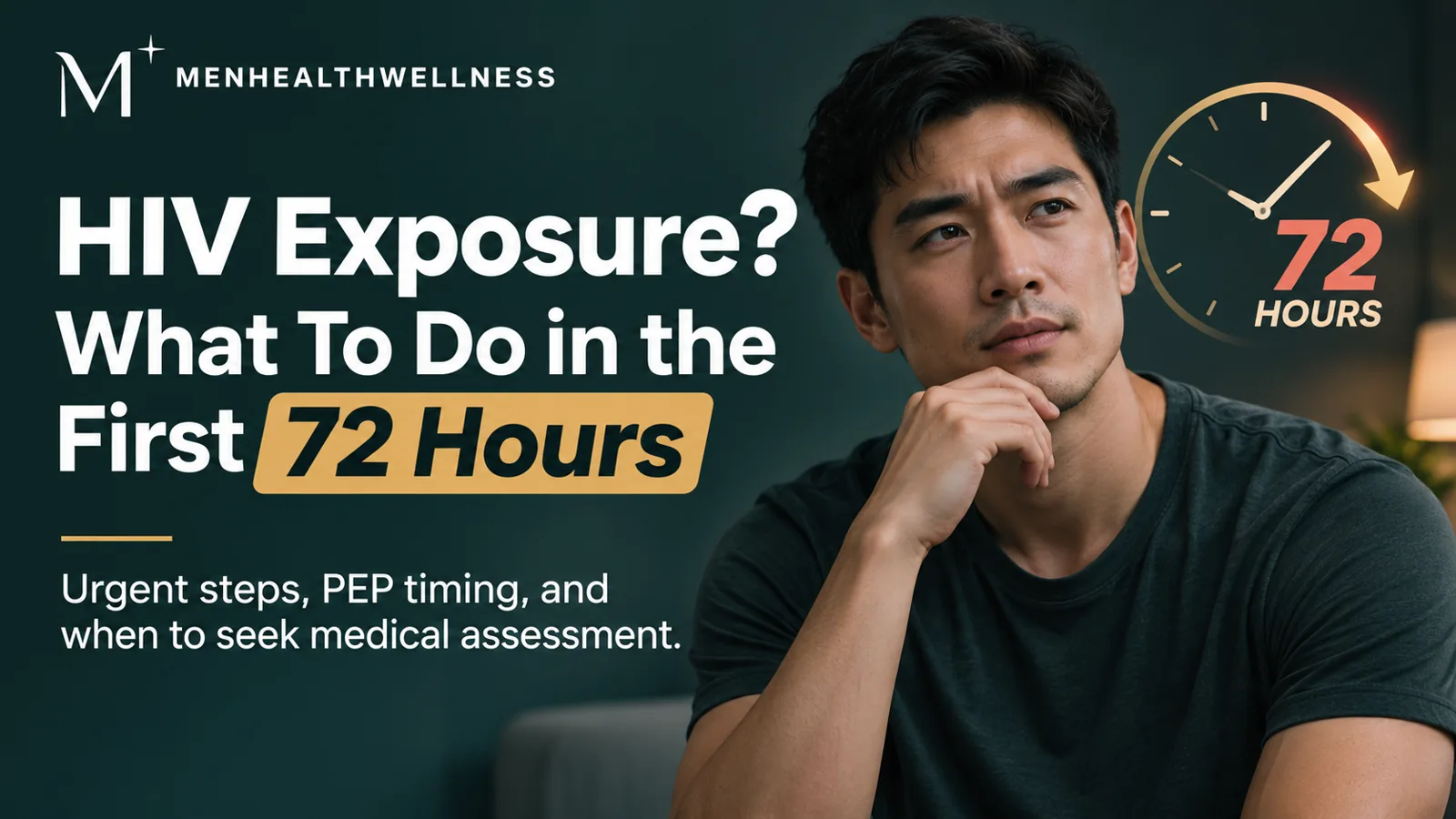
Possible HIV Exposure? The First 72 Hours Matter
If a condom broke, you had sex without a condom, or you are unsure about a partner's HIV status, it is understandable to feel worried.
However, a possible HIV exposure does not mean you have HIV. The most important thing is understanding what to do next and how quickly you need to act.
If a possible HIV exposure happened within the last 72 hours, seek urgent medical assessment immediately. A healthcare professional can determine whether you need post-exposure prophylaxis (PEP), medication that can reduce the risk of HIV infection after exposure.
Do not wait for symptoms or rely on a routine website enquiry if you may need emergency PEP.
Step 1: Understand What Counts as Possible HIV Exposure
HIV can be transmitted through certain body fluids, including blood, semen, vaginal fluids and rectal fluids.
Situations that may require assessment include:
- Vaginal or anal sex without a condom when a partner's HIV status or viral suppression is unknown.
- A condom breaking or slipping off during sex.
- Sharing needles or injecting equipment.
- Sexual assault involving possible HIV exposure.
The level of risk depends on the circumstances. For example, a person living with HIV who maintains an undetectable viral load through effective treatment does not transmit HIV sexually (U=U).
If you are uncertain about your exposure risk, seek appropriate medical advice rather than relying on assumptions.
Step 2: Ask About PEP Within 72 Hours
PEP stands for post-exposure prophylaxis. It is an emergency course of antiretroviral medication that may prevent HIV infection following a potential exposure.
PEP should be started as soon as possible, ideally within 24 hours and no later than 72 hours after exposure.
If prescribed, it is usually taken daily for 28 days.
PEP is not suitable for every situation. A qualified healthcare professional must assess the exposure, potential risks and appropriate medication.
For Malaysian guidance, visit the Malaysian AIDS Council's PrEP and PEP information.
Important: If you are still within the 72-hour window, seek urgent medical care now. Do not wait for a response through the MenHealthWellness contact form.
Step 3: Get an HIV Test at the Appropriate Time
An HIV test is an important part of assessing possible exposure.
However, a negative HIV test immediately after sex cannot rule out infection from that recent encounter.
This is because HIV tests have a window period, which is the time between infection and when a test can reliably detect it.
Different testing methods have different window periods.
If you are prescribed PEP, your healthcare professional will usually recommend baseline testing and follow-up HIV tests according to the relevant clinical protocol.
You may also need screening for other sexually transmitted infections.
For more information about available types of testing, explore our STD & HIV Testing information.
Planning an HIV or STD Screening?
If your concern is not an immediate exposure emergency, understanding which tests to take and when can help you make informed decisions.
MenHealthWellness provides information and care coordination to help individuals explore appropriate screening options through qualified healthcare providers.
Enquire About Private HIV & STD Screening →
*For non-urgent enquiries only. Testing availability and suitability must be confirmed with the healthcare provider.*
Step 4: Understand Other Sexual Health Risks
Unprotected sex can involve health concerns beyond HIV.
Depending on the circumstances, a healthcare professional may recommend screening for:
- Syphilis
- Gonorrhoea
- Chlamydia
- Hepatitis B and C
- Other sexually transmitted infections
Some infections may not produce noticeable symptoms.
This means feeling healthy does not necessarily indicate that you are free from infection.
Depending on your history, hepatitis B vaccination, additional preventive care or repeat testing may also be recommended.
You can learn more about the assessment process through our Health Screening resources.
What If More Than 72 Hours Have Passed?
If more than 72 hours have passed since the possible exposure, PEP is generally not recommended.
However, that does not mean you should ignore the situation.
You can still seek medical advice regarding appropriate HIV testing, other STI screening and future prevention options.
Your healthcare professional can explain which tests are suitable and when follow-up testing may be necessary.
Avoid self-diagnosing based on symptoms or purchasing unverified HIV prevention medication online.
PEP vs PrEP: Understanding the Difference
Although PEP and PrEP are both used for HIV prevention, they serve different purposes.
PEP — Post-Exposure Prophylaxis
PEP is intended for emergency use after a possible HIV exposure. It must be started within 72 hours and is usually taken for 28 days.
PrEP — Pre-Exposure Prophylaxis
PrEP is preventive medication used before potential HIV exposure. It may be appropriate for individuals who have an ongoing risk of HIV exposure.
PrEP requires an appropriate medical assessment, HIV testing and follow-up care.
If you have experienced repeated exposure concerns, discussing PrEP with a qualified healthcare professional may help you understand whether it is suitable for your circumstances.
When Should You Consider Regular HIV & STD Screening?
Regular screening may be appropriate depending on your sexual history, circumstances and individual risk factors.
You may wish to discuss screening if you:
- Have had sex without a condom.
- Have recently started a new sexual relationship.
- Have multiple sexual partners.
- Are considering PrEP for ongoing HIV prevention.
- Have concerns about a previous possible exposure.
A healthcare professional can advise on appropriate tests and screening frequency.
For more information about your overall health, visit our Men's Health resources.
Take the Next Step Towards Better Sexual Health
HIV prevention is not only about responding to an emergency. It also involves understanding your health, knowing when to get tested and exploring suitable preventive care.
If you are interested in non-urgent HIV screening, comprehensive STD testing or discussing future HIV prevention options, MenHealthWellness can help you explore appropriate next steps through qualified healthcare providers.
Your Health. Your Privacy. Your Next Step.
Whether you want to better understand HIV testing or explore PrEP suitability, an informed medical assessment is the starting point.
Contact MenHealthWellness for a Private Health Review →
MenHealthWellness is an independent health information and care-coordination platform. Medical testing, prescriptions and treatment are provided by qualified independent healthcare professionals, subject to clinical assessment and availability.
Urgent reminder: If a possible HIV exposure occurred within the last 72 hours, seek immediate medical assessment for PEP rather than submitting a routine enquiry.
*This article is intended for educational purposes and does not replace professional medical advice, diagnosis or treatment.*