

Quick answer: Practical considerations for records, provider verification, consent and follow-up. The safest starting point is an evidence-based clinical conversation, not an assumption that any one procedure or screening package suits everyone. In Malaysia, the provider should explain the indication, risks and follow-up before treatment decisions are made.
Start with the medical question
Travelling for a consultation is different from buying a guaranteed treatment package. Identify the concern you want evaluated and which type of licensed professional is appropriate. Enquire about assessment requirements and whether any tests need to be done before travel.
Check the provider, not only the website
Confirm the actual clinic or hospital, practitioner registration and whether the proposed service is within the provider’s scope. A booking coordinator should be clear about who provides clinical care and who is responsible for travel logistics.
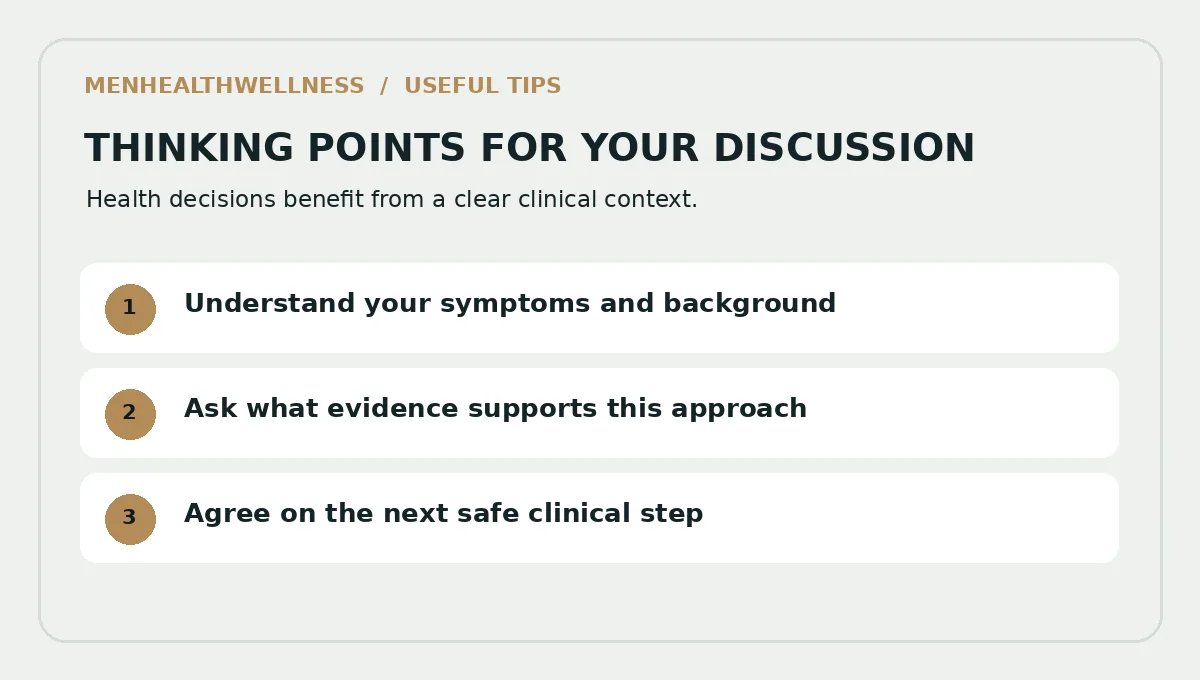
Prepare records securely
Bring relevant diagnoses, medications, allergies, investigations and previous treatment summaries. Ask the receiving provider how medical records should be transferred securely; avoid sending sensitive documents through informal channels without clear privacy arrangements.

Plan for uncertainty
A consultation may conclude that no procedure is suitable, or that additional testing is needed. Flexible travel plans are sensible. Costs can change if investigations or follow-up are required, so request transparent quotations.
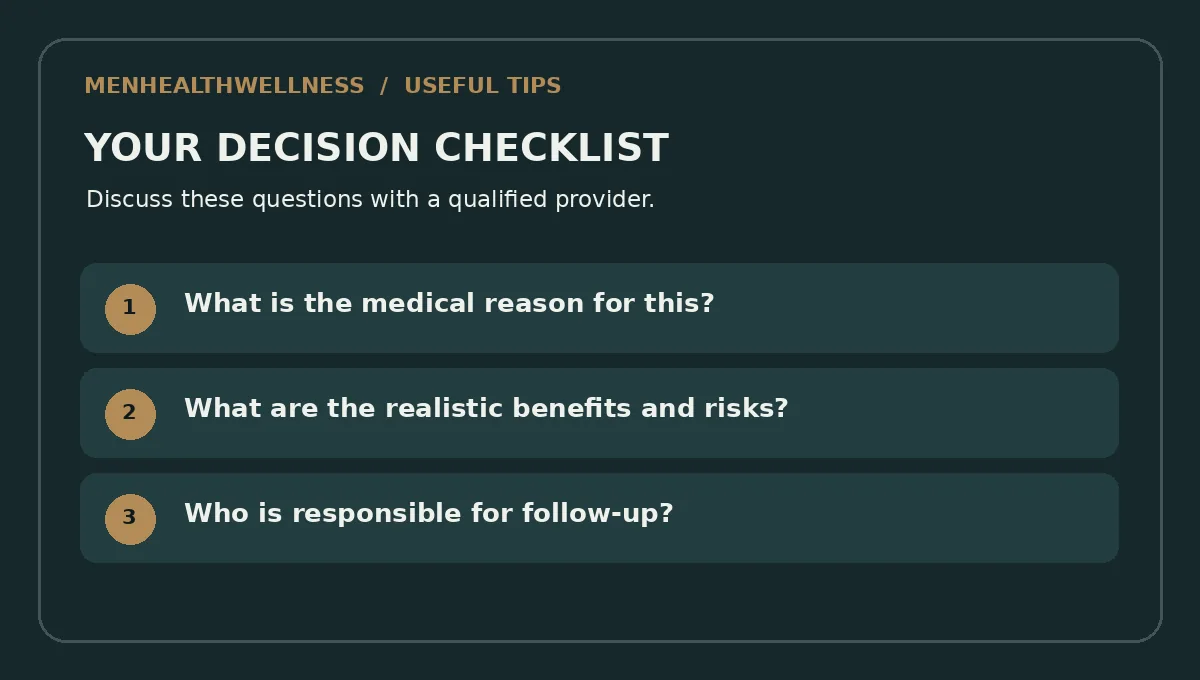
Think about aftercare before arriving
Ask about recovery requirements, medical fitness to fly, possible complications and how follow-up will work after returning home. For invasive procedures, travel timing should be discussed with the treating doctor, not decided from a tourism itinerary.
The coordinator’s limited role
MenHealthWellness can assist with introductions and administrative planning. It does not diagnose conditions, perform procedures or guarantee eligibility or outcomes. Medical decisions remain with the independent treating provider.
Compare total care, not just the quote
A headline procedure price may exclude consultation, diagnostic tests, extra nights, complications and follow-up. Ask for an itemised estimate and the name of the legal entity providing medical care. Confirm cancellation policies and whether additional testing could change your plan. The least expensive package is not necessarily the best fit, and the most expensive does not prove better outcomes. Responsible planning accounts for clinical uncertainty before tickets and accommodation become non-refundable.
Medical records and privacy
Gather recent investigation reports, current medicines, allergies, previous procedures and information about chronic conditions. Send sensitive files only through an approved secure method arranged with the receiving healthcare provider. Ask who can access the information and how it will be stored. A coordinator can assist with logistics, but it should be obvious when information is being sent to a doctor for clinical consideration and when it is only being used to arrange an appointment.
Prepare for care after returning home
A good travel plan includes what happens if a symptom develops after leaving Malaysia. Discuss the need for post-treatment reviews, medication checks, travel restrictions and a local clinician who can continue care. Some procedures may make immediate flying inappropriate. Do not rely on an itinerary that assumes eligibility and recovery time without a medical assessment. Knowing the limits of coordination services and the responsibilities of the treating provider can prevent avoidable misunderstandings.
Before making an appointment
Write down the main question about men’s healthcare in malaysia you want answered, how long the concern has existed and any relevant changes in symptoms or medication. A useful consultation should leave you understanding the medical reasoning, not just holding a quotation. Ask the provider to explain the likely next step, whether there are lower-risk alternatives and what warning signs warrant attention sooner. If the proposed procedure is optional, allow time to review written information and consider whether a second opinion would help.
If you are comparing providers
Different clinics may describe offerings related to medical travel but use different tests, products, staff and clinical pathways. Confirm the identity of the actual treating facility and practitioner. Clarify which services are available, what assessment is required before a decision and whether the quoted fee covers aftercare. Avoid assuming that an advertisement, online enquiry form or coordinator can guarantee treatment eligibility. Written explanations and transparent qualifications are more useful than aggressive promotional deadlines.
A note about medical information online
Search results can help you learn vocabulary and prepare questions, but online material cannot establish a diagnosis for an individual person. Guidelines evolve, and studies may apply to a narrower population than their headlines suggest. Verify health claims against credible clinical sources and relevant Malaysian rules. If your symptoms are severe, suddenly worsening or unusual, seek medical care rather than waiting for an online consultation. This guide to men’s healthcare in malaysia is educational and does not prescribe an individual treatment plan.
Planning a meaningful follow-up
A good discussion should also address uncertainty. Ask what happens if results are inconclusive, the expected timeframe for follow-up and whom to contact about an unexpected symptom. Keep notes of your questions, request copies of important reports and avoid making decisions based on promises of guaranteed outcomes. If you need help organising an appointment, distinguish administrative assistance from the medical advice that only a qualified treating professional can give.