
Quick answer: A balanced view of fatigue, sleep, stress, medical conditions and testing. The safest starting point is an evidence-based clinical conversation, not an assumption that any one procedure or screening package suits everyone. In Malaysia, the provider should explain the indication, risks and follow-up before treatment decisions are made.
Fatigue is a symptom, not a diagnosis
Being tired after a busy week is common, but persistent fatigue that affects work, mood or daily activities deserves attention. Poor sleep is one possibility among many, not a complete explanation. Symptoms lasting weeks may warrant a structured clinical review.
Sleep and everyday habits
Short sleep, irregular shifts, alcohol close to bedtime and poor sleep quality may contribute. Snoring, breathing pauses or morning headaches can suggest sleep-disordered breathing. Exercise, diet and caffeine patterns also matter, but lifestyle advice should not dismiss concerning symptoms.
Medical causes to consider
Depending on clinical context, possibilities include anaemia, thyroid disorders, diabetes, infections, depression, medication effects and chronic disease. Low testosterone can be considered when accompanying symptoms support testing, but fatigue by itself is not specific.

How clinicians assess fatigue
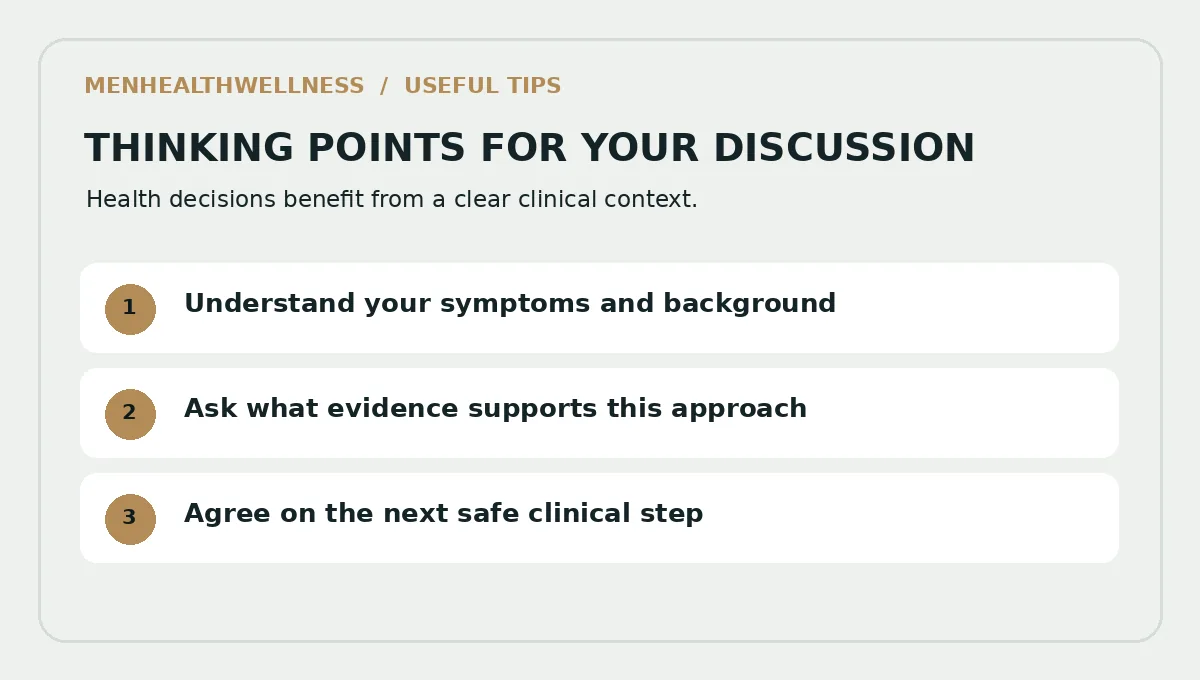
A clinician may ask about onset, sleep, mood, weight change, medication, substance use and associated symptoms before choosing tests. Blanket hormone panels or IV infusions are not a substitute for evaluation.
When to seek urgent help
Fatigue with chest pain, severe shortness of breath, fainting, confusion or other severe symptoms warrants urgent assessment. Rapid unexplained changes should not wait for a routine wellness appointment.
Build a useful record
Before a visit, note your sleep schedule, symptoms, changes in weight and appetite, medications and recent illnesses. This can make the consultation more productive and help separate temporary stress from a condition needing care.
Look at the pattern
Keep track of when tiredness occurs, whether it follows sleep loss, how long it has continued and which activities are affected. Relevant clues can include snoring, breathing interruptions during sleep, appetite changes, stress, new medication, fever or unexplained weight change. Such details can help a professional decide if sleep assessment, blood work or another evaluation is useful. The important point is not to settle for a single fashionable explanation without understanding the pattern.
Energy is not one measurable substance
A clinic may advertise energy boosters as though fatigue has one universal solution. There is no single blood marker or infusion that identifies and fixes every cause of low energy. People differ in sleep needs, medical conditions, workload and stress. Some causes are straightforward to improve; others require assessment and treatment. A responsible discussion distinguishes normal tiredness from persistent or severe fatigue and offers proportionate investigation rather than a default expensive package.
Small habits alongside clinical care
A regular sleep schedule, meaningful activity, appropriate nutrition and sensible alcohol use support wellbeing, but they do not replace medical attention for concerning symptoms. Review caffeine late in the day and the impact of overnight work when relevant. If low mood, anxiety or relationship strain is part of the picture, raise it openly. Your goal is not to prove that you can work harder despite exhaustion; it is to understand what your body may be signalling and choose safe next steps.
Before making an appointment
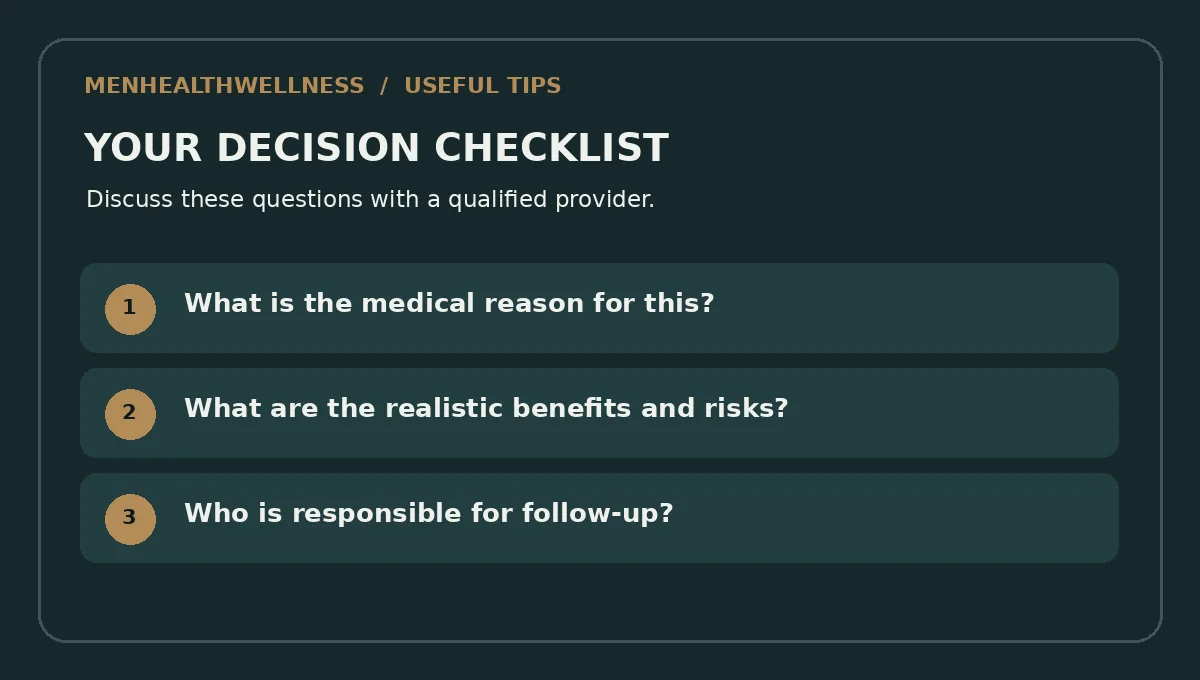
Write down the main question about why do men feel tired all the time? causes worth discussing you want answered, how long the concern has existed and any relevant changes in symptoms or medication. A useful consultation should leave you understanding the medical reasoning, not just holding a quotation. Ask the provider to explain the likely next step, whether there are lower-risk alternatives and what warning signs warrant attention sooner. If the proposed procedure is optional, allow time to review written information and consider whether a second opinion would help.
If you are comparing providers
Different clinics may describe offerings related to hormones & longevity but use different tests, products, staff and clinical pathways. Confirm the identity of the actual treating facility and practitioner. Clarify which services are available, what assessment is required before a decision and whether the quoted fee covers aftercare. Avoid assuming that an advertisement, online enquiry form or coordinator can guarantee treatment eligibility. Written explanations and transparent qualifications are more useful than aggressive promotional deadlines.
A note about medical information online
Search results can help you learn vocabulary and prepare questions, but online material cannot establish a diagnosis for an individual person. Guidelines evolve, and studies may apply to a narrower population than their headlines suggest. Verify health claims against credible clinical sources and relevant Malaysian rules. If your symptoms are severe, suddenly worsening or unusual, seek medical care rather than waiting for an online consultation. This guide to why do men feel tired all the time? causes worth discussing is educational and does not prescribe an individual treatment plan.
Planning a meaningful follow-up
A good discussion should also address uncertainty. Ask what happens if results are inconclusive, the expected timeframe for follow-up and whom to contact about an unexpected symptom. Keep notes of your questions, request copies of important reports and avoid making decisions based on promises of guaranteed outcomes. If you need help organising an appointment, distinguish administrative assistance from the medical advice that only a qualified treating professional can give.