

Quick answer: Symptoms, possible alternative causes and evidence-based testing considerations. The safest starting point is an evidence-based clinical conversation, not an assumption that any one procedure or screening package suits everyone. In Malaysia, the provider should explain the indication, risks and follow-up before treatment decisions are made.
Symptoms can overlap
Low libido, reduced morning erections, tiredness and changes in strength may occur in testosterone deficiency, but they also appear with poor sleep, depression, thyroid issues, obesity, medications and chronic illness. Symptoms alone do not prove a hormone disorder.
Why symptoms need context
A doctor may ask about sleep, exercise, body weight, stress, medical history, medications and future fertility plans. A sudden change deserves different consideration from gradual changes over several years. Other symptoms can guide whether additional tests are relevant.
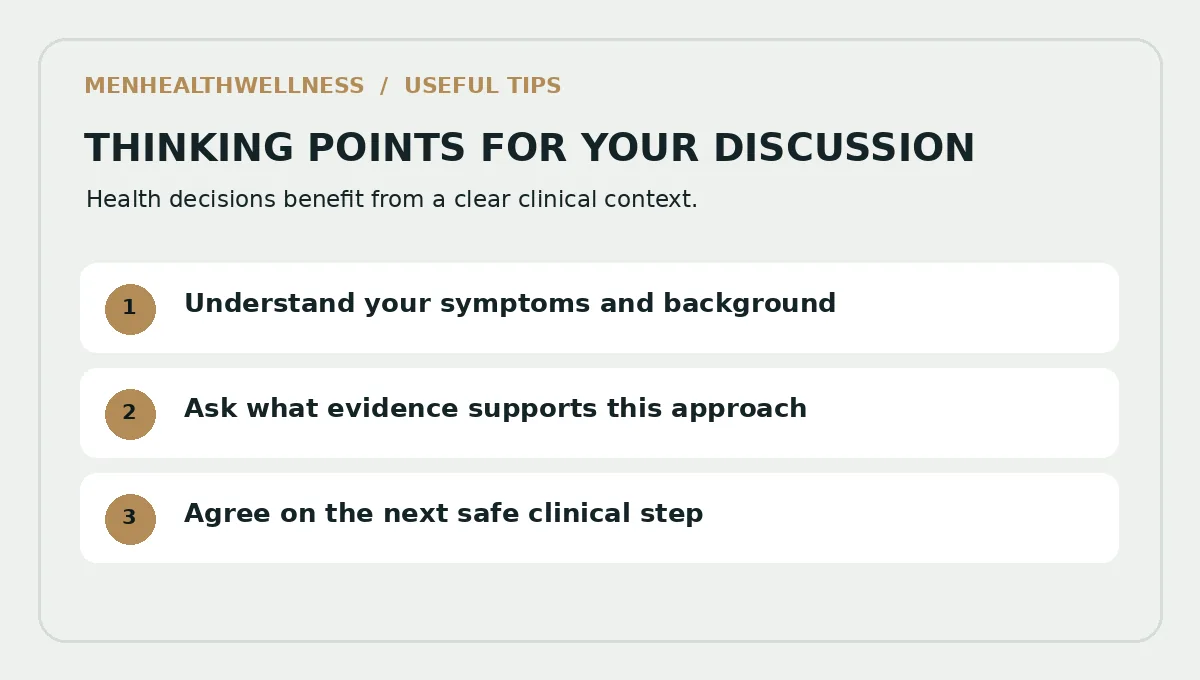
Testing properly matters
Testosterone varies during the day, so guidelines usually recommend early-morning blood samples. The American Urological Association recommends confirmation with two measurements on separate occasions. One random value, especially during illness, may not provide a reliable diagnosis.

What happens after a low result
The next step is not automatically a prescription. A doctor may review symptoms, repeat measurements and investigate underlying conditions. Some cases involve reversible factors. Additional hormone tests may be needed based on findings.
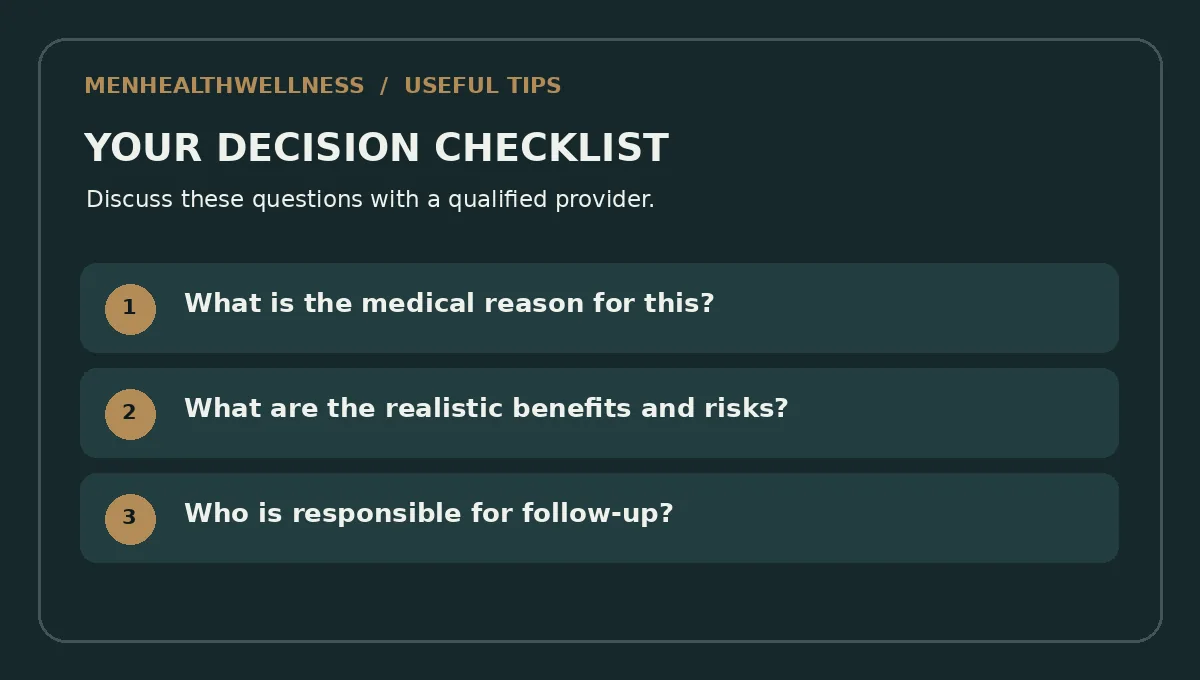
Fertility and treatment cautions
Exogenous testosterone can suppress sperm production and may be unsuitable when planning children. Therapy requires discussion of benefits, harms, contraindications and monitoring. Non-prescribed hormones and boosters carry risks and should not be used as shortcuts.
An evidence-led approach
Focus on identifying the actual cause of symptoms. Explain your priorities clearly and ask what the results mean for you, rather than comparing yourself with a single ideal number found online.
Numbers are only part of the picture
Hormone results must be considered alongside symptoms, timing, existing conditions and laboratory reference methods. Stress, sleep disruption, weight changes, some medicines and illness may affect measurements or the way symptoms feel. A report with an out-of-range number deserves discussion but does not automatically establish an enduring endocrine disorder. Conversely, ongoing symptoms deserve attention even when a single value appears normal. A healthcare professional can decide whether repeat sampling, other hormone investigations or a broader medical work-up makes sense.
Making the consultation useful
Bring the timing and pattern of your symptoms, medication and supplement history, existing diagnoses and any previous test results. If fertility is important now or may matter later, say so at the start because some hormone treatments affect sperm production. Ask your clinician which findings would change management and which would not. This helps avoid tests that have no clear purpose. A thoughtful plan should also address sleep, exercise and general health where they are relevant, without dismissing symptoms that require assessment.
Be wary of quick fixes
A social-media comparison with an ideal testosterone number is not a diagnosis. Neither a testosterone booster advertisement nor a one-off blood test can establish what treatment you need. Some unregulated products can contain undisclosed ingredients, and unsupervised hormones may cause harm. Medical treatment, when appropriate, needs monitoring and an explanation of risks, benefits and alternatives. The aim is not to chase a marketing number but to understand symptoms and identify a safe course of action with the treating professional.
Before making an appointment
Write down the main question about low testosterone symptoms in men you want answered, how long the concern has existed and any relevant changes in symptoms or medication. A useful consultation should leave you understanding the medical reasoning, not just holding a quotation. Ask the provider to explain the likely next step, whether there are lower-risk alternatives and what warning signs warrant attention sooner. If the proposed procedure is optional, allow time to review written information and consider whether a second opinion would help.
If you are comparing providers
Different clinics may describe offerings related to hormones & longevity but use different tests, products, staff and clinical pathways. Confirm the identity of the actual treating facility and practitioner. Clarify which services are available, what assessment is required before a decision and whether the quoted fee covers aftercare. Avoid assuming that an advertisement, online enquiry form or coordinator can guarantee treatment eligibility. Written explanations and transparent qualifications are more useful than aggressive promotional deadlines.
A note about medical information online
Search results can help you learn vocabulary and prepare questions, but online material cannot establish a diagnosis for an individual person. Guidelines evolve, and studies may apply to a narrower population than their headlines suggest. Verify health claims against credible clinical sources and relevant Malaysian rules. If your symptoms are severe, suddenly worsening or unusual, seek medical care rather than waiting for an online consultation. This guide to low testosterone symptoms in men is educational and does not prescribe an individual treatment plan.
Planning a meaningful follow-up
A good discussion should also address uncertainty. Ask what happens if results are inconclusive, the expected timeframe for follow-up and whom to contact about an unexpected symptom. Keep notes of your questions, request copies of important reports and avoid making decisions based on promises of guaranteed outcomes. If you need help organising an appointment, distinguish administrative assistance from the medical advice that only a qualified treating professional can give.