

Quick answer: A plain-language explanation of MSC counts, cell characteristics and why the number alone proves little. The safest starting point is an evidence-based clinical conversation, not an assumption that any one procedure or screening package suits everyone. In Malaysia, the provider should explain the indication, risks and follow-up before treatment decisions are made.
The label is only a starting point
MSC stands for mesenchymal stromal or stem cell, a term covering cells with defined biological properties. An advertised 100-million-cell amount tells you a claimed quantity, not necessarily the identity, viability or potency of those cells. A number should never be treated as a guarantee of clinical benefit.
Cell count is not the same as an outcome
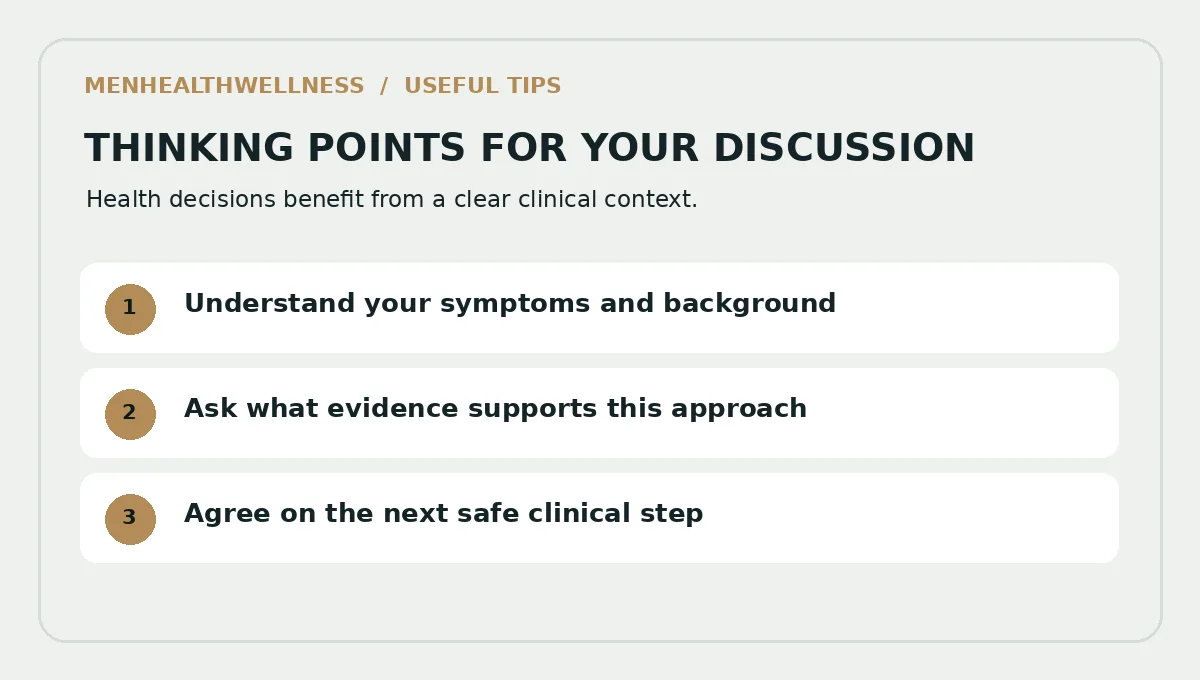
Real clinical outcomes depend on diagnosis, product quality, dosing rationale, route of administration and evidence from relevant studies. Higher numbers are not inherently better. A provider should explain how cell count was measured, how many cells are viable and why any proposed dose is appropriate for the indication.
Source and manufacturing questions
Ask whether cells are obtained from the patient or a donor, how identity and quality were assessed, how contamination was prevented and whether the product was stored and transported in controlled conditions. These details matter for safety and for interpreting claims.

What P2 may refer to
In cell culture, a passage number often describes how many times cells have been subcultured. But the meaning of a commercial label such as P2 must be confirmed by its producer; it should not be inferred from marketing alone. Ask to see traceable product information rather than relying on abbreviations.
What published evidence can establish
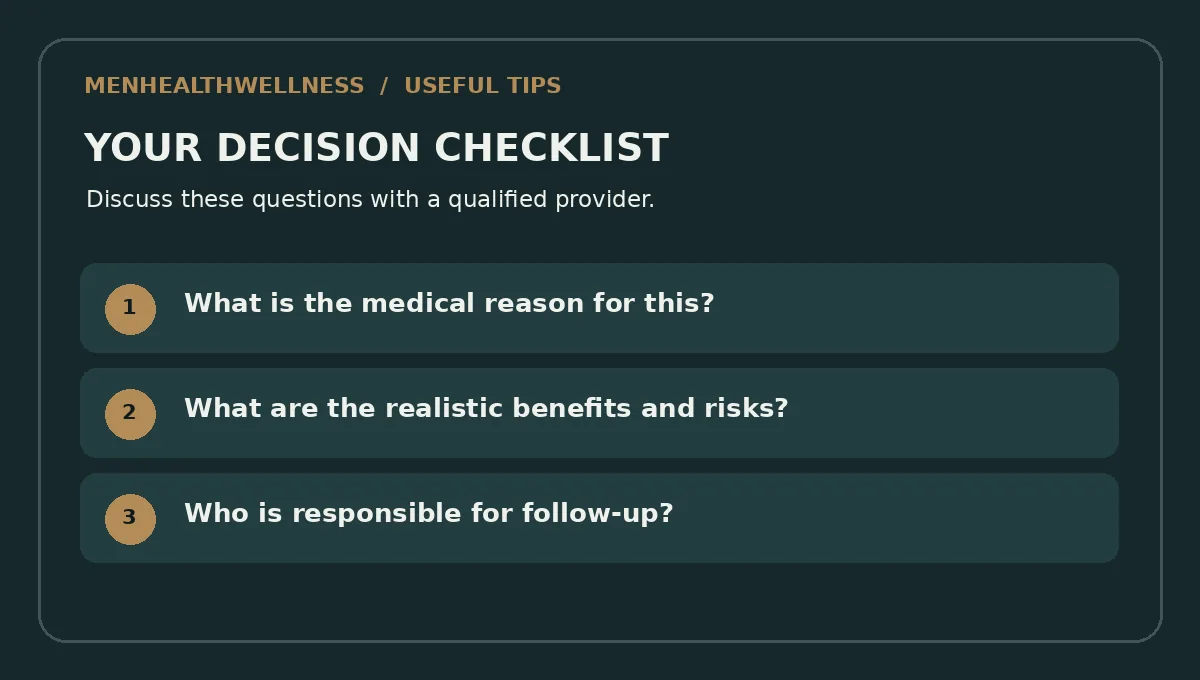
A clinical study should describe who was enrolled, the exact intervention, outcomes, adverse events, comparison groups and duration of follow-up. Results for one condition cannot be transferred automatically to anti-ageing, erectile dysfunction, fatigue or another unrelated goal.
The right next conversation
Bring a clear list of symptoms and conditions, then ask a doctor whether any cell-based intervention has a valid role. Compare it with conventional care and with doing nothing. A coordinator cannot replace that medical evaluation.
Questions about research quality
A responsible discussion starts with the actual medical indication and the evidence for that precise intervention. Ask whether there are peer-reviewed human trials, how participants were selected, whether outcomes were compared with standard care and how long patients were followed. Results from cells used in one tissue or disease cannot be assumed to apply to unrelated conditions. Regulatory permission, ethical approval and scientific efficacy are distinct questions. If a provider cannot give an understandable account of these points, the information is not yet adequate for an informed choice.
Understanding consent and follow-up
Informed consent is a conversation rather than a signature on a form. A credible provider should explain foreseeable complications, uncertainty about long-term outcomes, realistic alternatives, the option not to proceed and where to seek help after an adverse event. Ask who keeps your records and what follow-up is included. If follow-up must happen after you return to another city or country, establish how results and complications will be communicated. Feeling rushed is a reason to slow the process, not to sign sooner.
Why bold marketing needs closer examination
Words such as cutting-edge, regenerative and personalised can sound reassuring, but do not define a clinically proven procedure. A laboratory-quality photograph cannot tell you whether a product was manufactured appropriately or whether an intended indication is supported. Testimonials are vulnerable to selection bias and changes that might have occurred without intervention. Look for transparent discussion of uncertainty as well as potential benefit. Someone offering only success stories and a high cell count has not answered the most important questions a prospective patient should ask.
Before making an appointment
Write down the main question about what does “100 million msc stem cells” actually mean? you want answered, how long the concern has existed and any relevant changes in symptoms or medication. A useful consultation should leave you understanding the medical reasoning, not just holding a quotation. Ask the provider to explain the likely next step, whether there are lower-risk alternatives and what warning signs warrant attention sooner. If the proposed procedure is optional, allow time to review written information and consider whether a second opinion would help.
If you are comparing providers
Different clinics may describe offerings related to stem cell & regenerative medicine but use different tests, products, staff and clinical pathways. Confirm the identity of the actual treating facility and practitioner. Clarify which services are available, what assessment is required before a decision and whether the quoted fee covers aftercare. Avoid assuming that an advertisement, online enquiry form or coordinator can guarantee treatment eligibility. Written explanations and transparent qualifications are more useful than aggressive promotional deadlines.
A note about medical information online
Search results can help you learn vocabulary and prepare questions, but online material cannot establish a diagnosis for an individual person. Guidelines evolve, and studies may apply to a narrower population than their headlines suggest. Verify health claims against credible clinical sources and relevant Malaysian rules. If your symptoms are severe, suddenly worsening or unusual, seek medical care rather than waiting for an online consultation. This guide to what does “100 million msc stem cells” actually mean? is educational and does not prescribe an individual treatment plan.