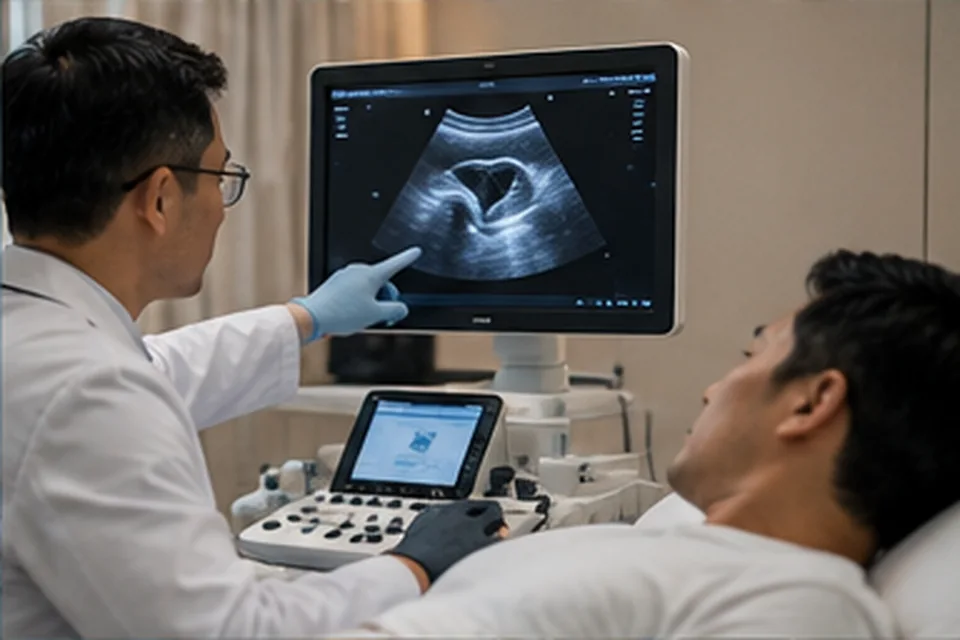
Understanding FibroScan & Liver Fibrosis Assessment
Transient elastography can estimate liver stiffness and can support fibrosis risk assessment. The result is not a standalone diagnosis.
The suitability of a test or treatment depends on your medical history, examination and individual risk. This page provides information, not a clinical diagnosis or a promise that a specific procedure is available.
What a proper assessment considers
Relevant medical history, current medications, associated symptoms, prior test results and risk factors are important. The doctor may recommend examination or investigations when indicated. Assessment helps distinguish reversible factors from concerns needing a specialist.
- Symptoms, timing and impact on everyday life
- Medical history, existing diagnoses and medications
- Evidence-based options, benefits and realistic limitations
- Potential harms, alternatives, costs and follow-up
What transient elastography measures
FibroScan uses a specialised form of ultrasound-based elastography to estimate liver stiffness, which may indicate fibrosis. Some equipment also estimates liver fat. Results are interpreted in light of other clinical findings and test quality.
What can change the measurement
Inflammation and other factors can affect stiffness, so a measurement is not proof of a single diagnosis. A qualified clinician may combine elastography with liver blood tests, risk calculations and imaging as appropriate.
Preparation and interpretation
Ask the providing clinic about preparation, the clinician who will interpret the scan and how results affect follow-up. A screening package is only useful if unexpected results can be discussed and managed.
Understanding available options
No single intervention suits everyone. Decisions should follow current clinical evidence and the treating provider’s evaluation. An enquiry does not guarantee that any test, prescription, infusion or procedure will be offered.
How MenHealthWellness can help
A qualified clinician can determine whether screening, treatment or referral is appropriate. We help organise relevant questions and, when appropriate, a referral or introduction to an independent provider. You remain free to seek a second opinion.
Reference and verificationClinical details should be checked with your treating professional. Reference: Read external medical guidance ↗
Information last updated 16 October 2026 · Editorial content — clinical review required prior to live medical advertising